
WHAT IS THE DIFFERENCE BETWEEN...
By Mauro Marturano
...a world with few goods and no money, and a world with few goods and a great deal of money?
Theory would say: none. Practice... all the difference in the world.
Theory would say none because, sorry for the repetition, in theory money has no value in and of itself: it should be a neutral unit of measurement. But reality, practice, tells us something completely different. It tells us that money has become an asset: there have been better assets (the dollar, the euro) and much worse assets.
And this means that a citizen of certain parts of the world, with the same abilities and performing the same jobs, compared with a citizen of another part of the world, will have an easier or a more difficult life depending on the strength of the currency of the country in which they are born.
Currency, which should therefore be a neutral unit of measurement, is anything but neutral.
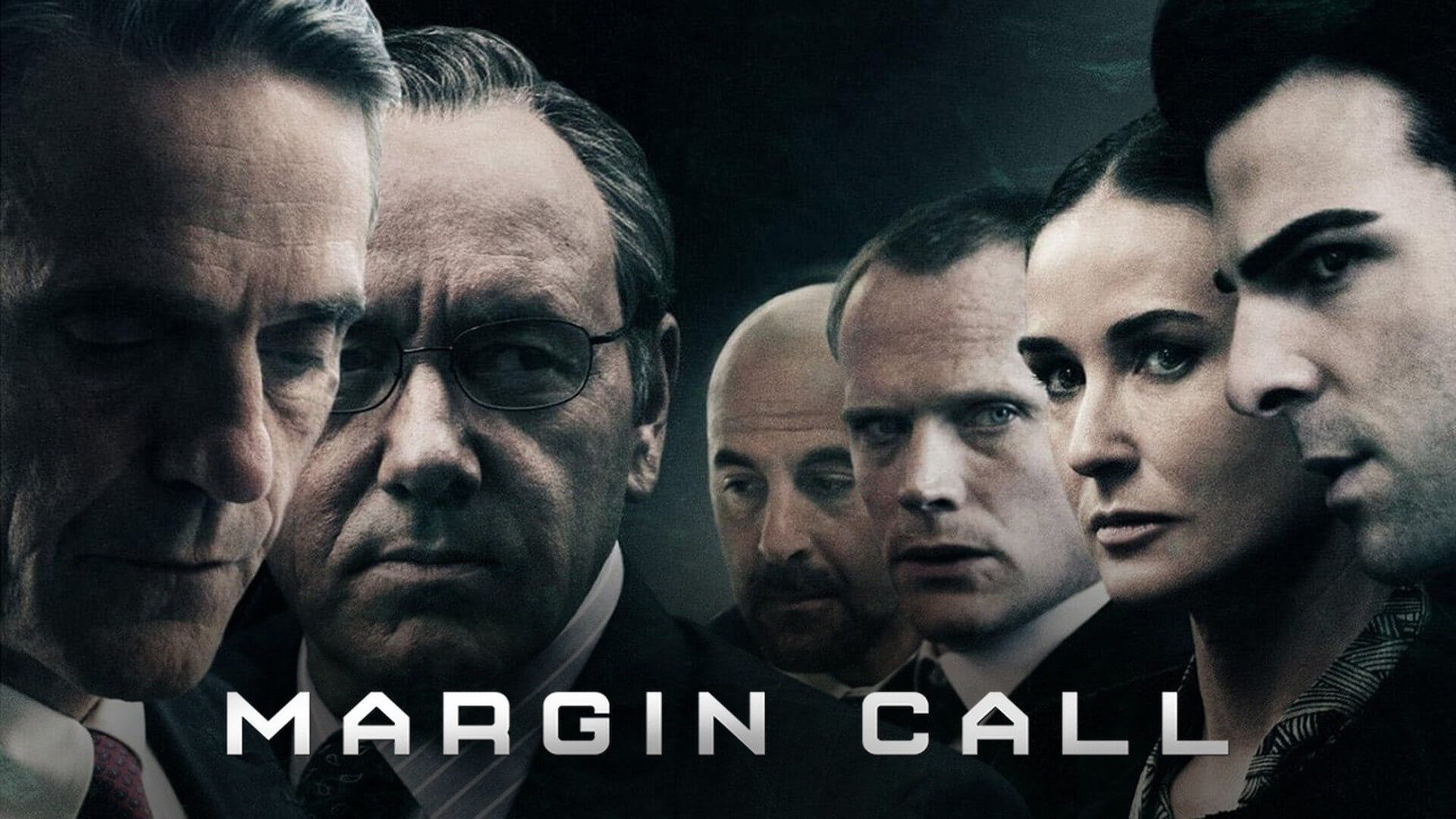
But let's go back to the original question. The difference between the two worlds is all contained in those 12 seconds from a clip from the film Margin Call, in which Jeremy Irons explains what money really is: “pieces of paper that stop people from killing each other to get something to eat.”
If you look at it this way... and yes, I think this is how we should look at it... the primary function of money is not to be a unit of measurement, but to be a tool of social control.
It may sound like an overly strong definition, but I remember perfectly well, six years ago, during the great disgrace, people fighting over the last roll of toilet paper.
To this day, many of you believe that there are goods behind the money you possess. You believe that, if you wanted to, you could turn your money into physical goods whenever you felt like it.
If you still have the perception that you can do this, it is simply because they make sure you cannot do it without you realizing it.
Try asking to have your salary, your pension, or the rent from a house you own paid to you in liters of gasoline.
At that moment, you would understand what your money is for and how much your piece of paper is actually worth.
As I always say, you cannot understand life today... unless you understand, or are willing to understand, certain lines of reasoning that represent the real rules of life.
One hypothesis that absolutely cannot be dismissed, therefore, is that currency has not only been an extraordinary tool of control, but also what has allowed us to avoid descending into permanent civil war, into a constant one-on-one struggle.
To discredit or refuse to consider this hypothesis as a possibility not only means failing to understand the function of money; it also means forgetting what happened six years ago, when, in the face of practically nothing, extraordinary polarization and violence emerged.
And I repeat: in the face of nothing.
Supermarkets full, few or, more accurately, very few deaths, no earth-shattering event... but a great deal, a great deal of violence.
The theory I have been explaining to you for many years is, essentially, that the Matrix derives above all from paper, from the (fictitious) rights that derive from that paper.
Let me give you a practical example to make this clear.
Let's imagine living in a world without currency. Let's assume that I know how to make a chair, and that very few people know how to make chairs.
What will everyone else do?
Either they sit on the ground, or they will have to exchange the chair for products they know how to make.
And what if someone doesn't know how to do a damn thing? Or what if someone is sick and cannot work?
What the hell happens then?
Is there a risk that, while I am out gathering wood to make the chair, someone might come into my house and steal the chair and other things from me?
I say yes.
Anyone who is certain the answer is no has forgotten what happened six years ago.
Objectively speaking, at our latitudes and in many other parts of the world, we have not reached that point, and we do not reach it. In certain other places, however, we do reach it (where the monetary system works less effectively).
And so... can we really rule out the possibility that this — currency — is both the mechanism of control and, at the same time, the mechanism that prevents a constant one-on-one struggle? 😂