
THERE CAN ONLY BE FRICTION, RESENTMENT, AND EVEN FALLING OUT OF LOVE
By Mauro Marturano
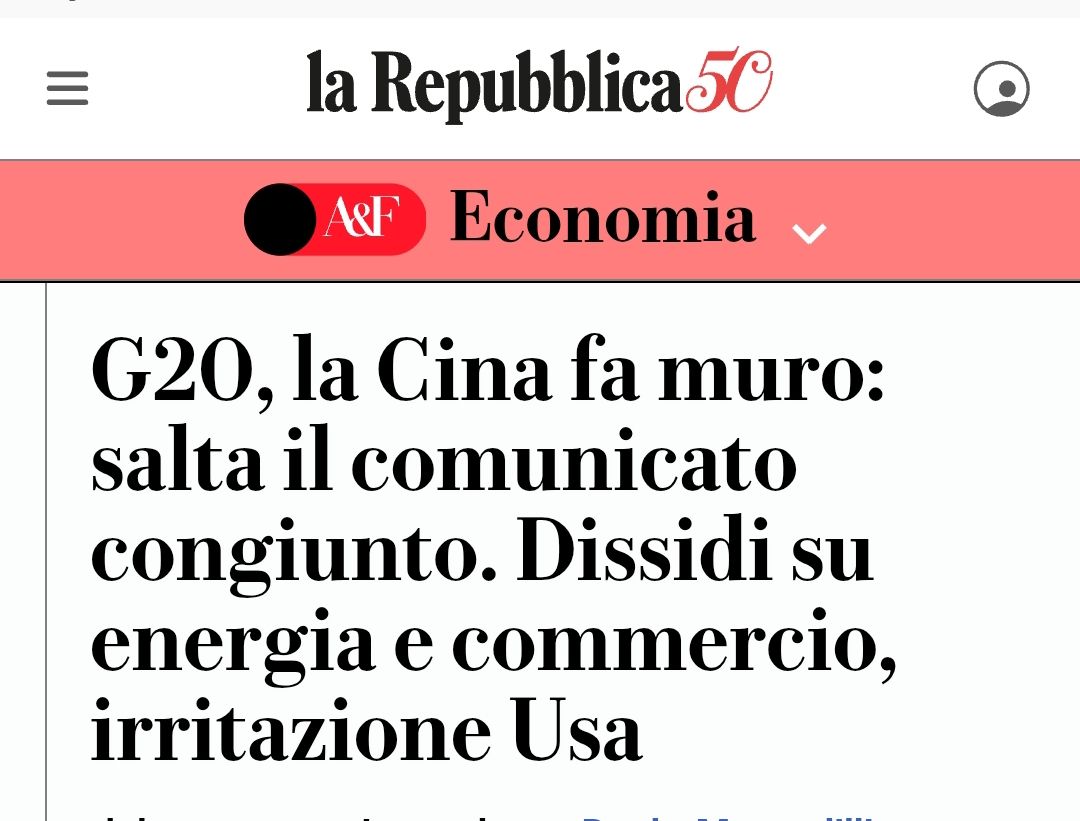
The world we knew, the one of massive globalization, the one of free movement of goods, capital and people, no longer exists.
It no longer exists because it became an unsustainable world: the money printer ran, obviously, at a faster speed than real production. So we got to a point where there's a huge amount of money out on the streets while, at the same time, not the same quantity of physical goods. Nor, at this point, a percentage that would let the system stay standing.
The numbers are hard to grasp, but if the money supply is 10 times real production, even if just 11/15/18% of people (not the whole population) asked to convert their money into goods, they wouldn't find any. And that would be... the real Apocalypse.
It was, and remains, absolutely necessary that there be FRICTION. And that this friction translate into trade problems, into energy problems that, ultimately, cause the money supply to lose value — or its complement (the rise in the price of real goods).
All these shows are the natural, inevitable result of the degradation of the fiat currency par excellence (the dollar) and of all its derivatives (euro, pound, peso, Turkish lira).
To avoid arriving at a world in total monetary imbalance relative to physical goods — where the final stop is a desert island with nothing but cash — they necessarily have to create the conditions for what I described above to happen.
If globalization had been a method of CONTROLLING the world's population, then the end of globalization is one too.
Today, for the whole shack to hold up, high inflation is needed, and, if possible, recession/low growth too. This economic phenomenon goes by the name of STAGFLATION. In other words, it requires that (monetary) value be destroyed.
The war between the US and China is a tedious piece of theater, because globalization was their explicit will:
- the US (and not only the US) offshored production starting in the 1970s;
- the Chinese governments enslaved their own population in order to have low-cost workers;
- the Chinese, buoyed by a positive trade balance, invested their surpluses in US bonds;
- point 3 let the American wheel of easy credit (and that of its colonies, like us Europeans) keep turning.
Anyone who disagrees with the steps I've just laid out is either ignorant or acting in bad faith. One of the two.
And, if I grant that globalization was an agreement, it's hard for me to think that deglobalization is happening without one.
And the reasons for the agreement... are all there!